What Happens When We Turn Off Social Media Algorithms?
Guest Commentary


Audio By Carbonatix
By Shawn Paul Wood, Crosswalk.com

Key Points
- Australia's proposed “My Feed, My Way” initiative would give users more control over whether personalized recommendations appear in their default social media feeds.
- Social media algorithms can make useful recommendations, but platforms also have financial incentives to keep people watching, clicking, and engaging.
- Algorithms can amplify our existing interests and desires, but they do not remove our responsibility for what we choose to consume.
- Scripture repeatedly calls Christians to pay attention to what shapes their minds, hearts, desires, and use of time.
- Digital discernment means deliberately choosing what deserves our attention instead of allowing a platform to make that decision for us.
Imagine waking up at 2 a.m. for your daily doomscrolling and seeing something strange in your feed.
Family, friends, church, recipes you will never cook, those cute AI dog videos, and a few of those “popular” people from high school who aged in advance—much to your hidden delight. That’s it.
You didn’t have to mute random political blowhards. There was no ragebait from anonymous accounts. And gone were those repeat ads to a travel destination no one can afford.
Breathe out. Smile. Roll your eyes all you want. Something surprisingly close to that could become reality Down Under.
The Australian government has proposed an initiative called “My Feed, My Way,” which would require social media platforms to notify users and give them a choice about whether their default feed includes algorithmically recommended personalized content.
That’s fascinating technology news, but that’s only the beginning. Follow the money, and there is a financial story. Ask what these platforms know about their users, and there is a privacy problem. Discover who should get to decide what somebody sees, and things get unethical-ish quickly.
And then, there is the implication for Christians, which goes one step further.
Long before Mark Zuckerberg was sitting in a Harvard dorm building, Facemash and comparing who was “hot or not” on campus, Scripture was already concerned with something deeper about people. Namely, what we allow to occupy our minds.
Paul told Christians to think about whatever is true, noble, right, pure, lovely, admirable, excellent, and praiseworthy (Philippians 4:8). He didn't have a Facebook account. Still, he certainly understood the importance of taking thoughts captive rather than allowing them to take us captive (2 Corinthians 10:5).
How Do Social Media Algorithms Decide What We See?
Algorithms can predict your actions based on your previous scrolling behavior and connect you with content based on what you watch, click, like, share, or ignore. They’re smart and are getting to know you faster than you can watch “The King and I.”
You know what? That’s not automatically bad.
Those same inhuman creations create communities—collections of people that even churches and ministries thank God for finding online. The same basic technology Netflix uses to recommend another mind-numbing reality show can help someone discover a church, Bible teacher, or Christian community.
You expressed interest at some point. That’s the secret. The problem is when technology becomes too pushy—like the houseguest who won’t leave.
People sometimes appreciate a little help finding what comes next. Trouble begins when “What might this person value?” gets confused with “What will keep this person looking?”
A Federal Trade Commission report found that major social media and video-streaming companies collected and retained enormous amounts of personal information and fed that information into automated systems, including algorithms, analytics, and artificial intelligence. They don’t need to know you intimately. They need to know you well enough to predict where you click.
Why Is Our Attention Worth So Much Money?
You have heard this in church or perhaps in a Bible study, but it warrants repetition and clarification. Money is not the root of all evil. The love of money is a root of all kinds of evil (1 Timothy 6:10).
Meta, Alphabet, TikTok, and other technology platforms are businesses. They employ people, sell products, and answer investors. There is nothing inherently sinister about making money.
The interesting part is what they have to sell. In large part, it is our attention.
Billions of people use Facebook, Instagram, Messenger, and WhatsApp every day. In fact, Meta reported 3.60 billion daily active users across its Family of Apps in June 2026. Meta has also introduced Meta One, a collection of paid subscription plans offering additional features across its apps. Whether the revenue comes directly from users or from advertisers trying to reach them, attention has enormous value.
Jesus taught that “where your treasure is, there your heart will be also” (Matthew 6:21).
In a world where some of the largest companies ever built compete relentlessly for our eyes, clicks, and time, Christians might consider a related question: If something continually captures our attention, how long before it begins influencing our hearts?
What Happens When an Algorithm Chooses What We See?
That is what makes Australia’s experiment so interesting. “My Feed, My Way” doesn't propose abolishing algorithms. Australians aged 16 and over would instead be able to opt in or out of algorithmically recommended content as their default feed.
On the surface, that sounds like a technology setting. For Christians, however, there is another question beneath it, because an algorithm is increasingly helping to decide what deserves our attention next.
One video led to another. One angry post introduces another. A harmless curiosity can become an evening spent consuming content about something you had barely considered 45 minutes earlier. The technology doesn't necessarily force us to believe anything; it just keeps placing another thing in front of us to consider.
Scripture was concerned about that process long before anyone had a feed to scroll. Paul instructed Christians to “be transformed by the renewing of your mind” (Romans 12:2), while Proverbs warns us to guard our hearts because everything we do flows from them (Proverbs 4:23).
Neither passage mentions an algorithm because neither needs to. The technology changed. Human nature didn't.
Would Turning Off Personalized Recommendations Fix the Problem?
Here is where blaming Silicon Valley gets inconvenient.
It would be wonderfully easy if Christians could blame technology for every ugly argument, jealous thought, wasted hour and unhealthy obsession that appears while scrolling. Turn off the algorithm, and we could all go back to being perfectly reasonable human beings.
James ruins that theory.
He writes that temptation occurs when people are “dragged away by their own evil desire and enticed” (James 1:14). An algorithm can learn what attracts our attention, amplify it, repeat it and recommend something similar. Still, it cannot create every desire it discovers.
Sometimes the machine isn't manipulating us as much as holding up a disturbingly accurate mirror.
That may be the most intriguing part of Australia’s proposal. Give people the ability to turn off algorithmic recommendations, and we may discover how much of the problem lies with the technology and how much with us.
Who Is Curating Your Mind?
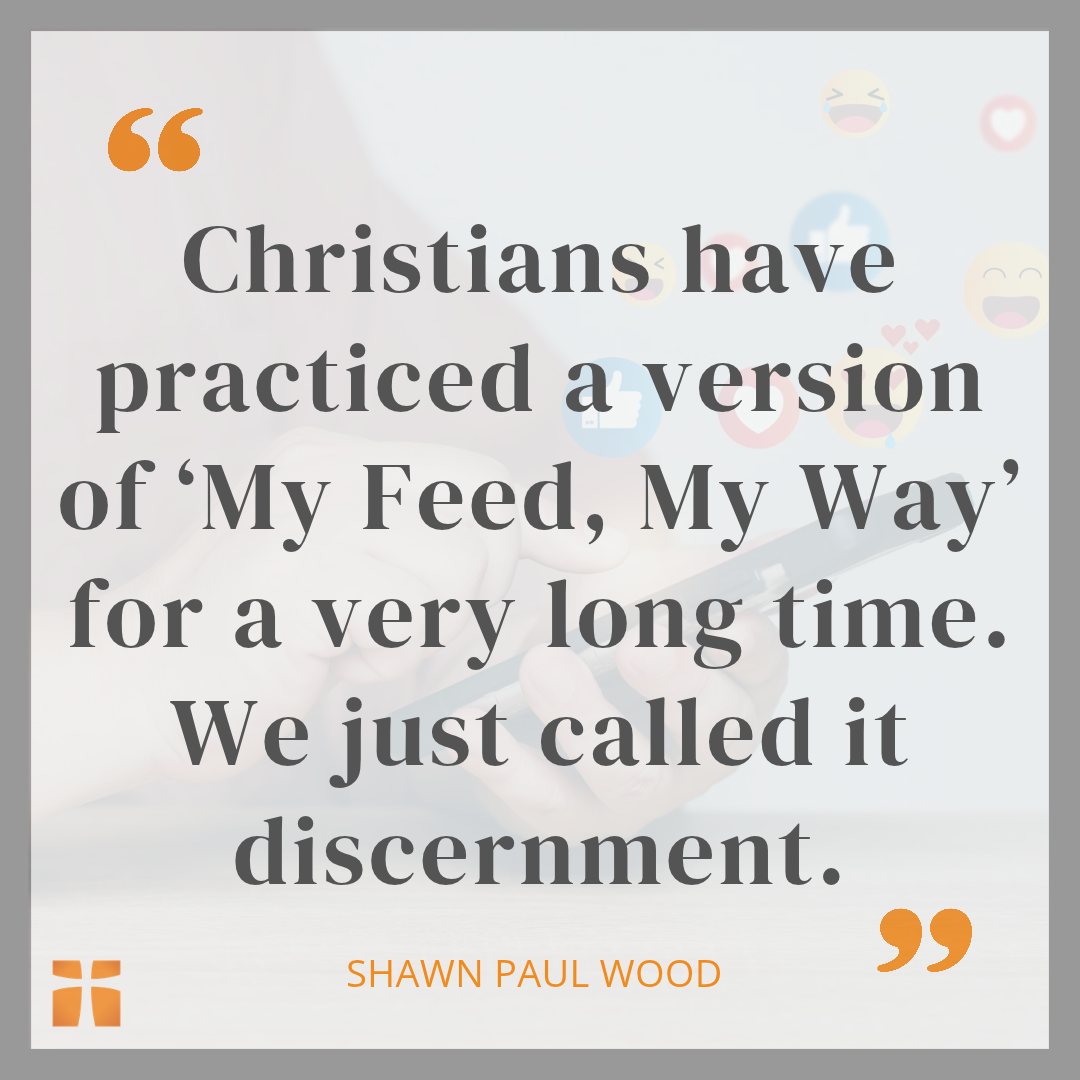
Christians have practiced a version of “My Feed, My Way” for a very long time. We just called it discernment.
Paul told the Corinthians that although everything may be permissible, not everything is beneficial (1 Corinthians 10:23). He instructed the Ephesians to be careful how they lived and to make the most of their time (Ephesians 5:15-16). Neither instruction requires Christians to abandon technology. Both require us to make choices about what deserves our time and attention.
Maybe that means unfollowing something. Maybe it means putting the phone down occasionally, deliberately seeking information instead of waiting for information to find us, or reading someone with whom we disagree without surrendering the next hour to videos carefully selected to make us dislike that person even more.
More importantly, it means asking a question social media companies have little financial incentive to ask on our behalf: Is this good for me?
Australia may soon give millions of people a button that makes that question easier to answer. Christians don't have to wait for one.
The algorithm may know what keeps your attention. It doesn't get to decide what deserves it.
Frequently Asked Questions
What is Australia's “My Feed, My Way” proposal?
It is a proposed Australian rule that would require social media platforms to give users a choice between personalized algorithmic recommendations and a following-only feed.
Can users completely turn off social media algorithms?
Not necessarily. Australia's proposal concerns personalized recommended content in the default feed rather than removing every algorithmic system a platform uses.
Why do social media companies use algorithms?
Algorithms help platforms recommend content based on users' behavior and interests, which can improve discovery while also encouraging continued engagement.
What does the Bible say about what we give our attention to?
Passages such as Philippians 4:8, Romans 12:2, Proverbs 4:23, and Ephesians 5:15-16 encourage Christians to think carefully about what shapes their minds, hearts, and use of time.
How can Christians practice digital discernment?
Christians can deliberately choose what they follow, unfollow harmful content, seek information intentionally, limit mindless scrolling, and ask whether what they consume is beneficial and spiritually formative.
For Further Reading
- Deciphering Truth in an Age of Algorithmic Influence
- How to Guard Your Mind in the Digital Age
- What Social Media ‘Addiction’ Reveals About the Battle for Our Attention
- Bloomscrolling: How Christians Can Guard Their Minds
- Reclaim Your Peace and Replace Infinite Scrolling
Photo Credit: ©Pexels/Andrea Piacquadio
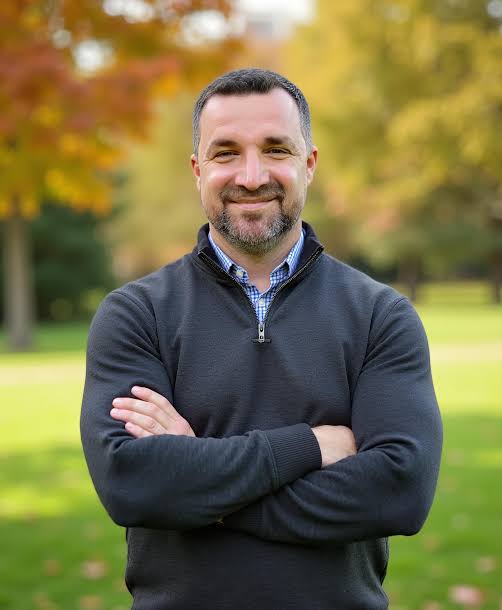 Shawn Paul Wood, Th.D., is an award-winning copywriter, storyteller and ghostwriter of faith-based books, speeches and columns for brands, spiritual leaders and Christian public figures. With more than 20 years in communications and marketing, he founded Woodworks Communications, where he leads a team of SEO, AI and content strategists. His team helps faith-based, nonprofit and mission-minded organizations turn unclear messaging into clear strategy, strong websites and stronger visibility across search and AI, including AEO, GEO, SXO and AIO. He lives in the Dallas/Fort Worth area.
