Dying To Move On (cont'd)
Ministries > Destined for Victory with Paul Sheppard
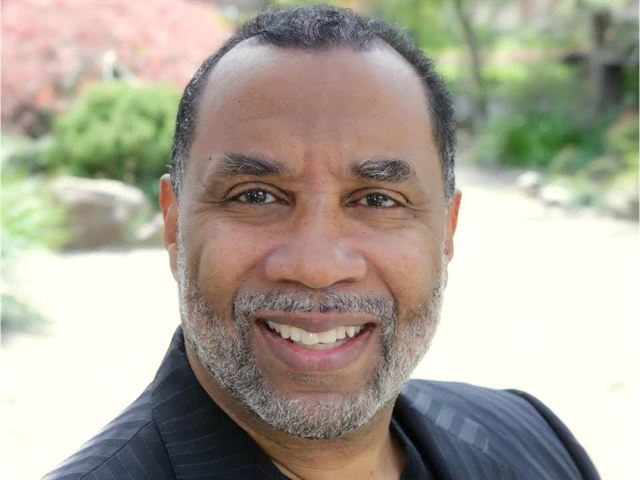
Learning to forgive others and move on from painful experiences; practical insights from the story of the unforgiving servant (Included in the series Dying To Live)
Order this full message on MP3 HERE
Paul Sheppard: So all of us owe God a debt we couldn't pay. That's why Jesus came. And that's what he means when he says the master took pity on his servant. Took pity on his servant and forgave the debt. That's what Jesus coming is all about. God took pity on us. And when he looked at our helpless estate, he wrapped himself up in flesh and came down and redeemed us.
Guest (Male): In light of God's mercy towards us, how can we not show mercy to others? Hello and thanks for stopping by for today's Destined for Victory, where we feature the preaching ministry of Pastor Paul Sheppard. If someone has wronged you, wounded you, or sinned against you in some way, you're in good company. Jesus suffered greatly at the hands of men, and yet it was he himself from the cross upon which he was dying who said, "Father, forgive them for they know not what they do." Today you'll be challenged to let go of what lies behind, forgive those who have done you harm, and move on towards your high calling in Christ Jesus. Remember to come see us at PastorPaul.net where you can listen to any recent message on demand, including today's. That's PastorPaul.net. Now let's listen closely to Pastor Paul's Destined for Victory message, "Dying to Move On."
Paul Sheppard: Do you understand the magnitude of that part of the story? Jesus said a king had a servant who owed him 10,000 talents. Now we don't live where talents is one of the means of exchange, and so you've got to understand that according to our economy, many scholars estimate that a talent as spoken of here in that context would translate in our society to $2,000. One talent, $2,000. Do you know what that means? That means that Jesus said there was a servant who owed his master $20 million. $20 million. And when it came time to pay, he didn't have it. Well, tell me something I don't know. Of course, he didn't have it. Now, Jesus was just using that figure because his listeners would realize that's an overwhelming figure. But the point, Jesus' point is there was a debt that there's no way it could be covered. So even if you're a multimillionaire listening to this message, for you the figure is 200 million. And even if you're a billionaire, for you the figure is 200 billion. You see what I mean? It's a figure you can't pay. That's what Jesus meant. You owed a debt you couldn't pay. Guess who he's talking about? He's talking about you and he's talking about me. We owe God a debt we can't pay. Do you know salvation has all to do with God and nothing to do with me? There's no way I can save myself. There's no way I can stand right before God. There's no way I can obey some little set of commandments and satisfy the nature of a holy God. We were born in sin. We were dead before we ever got here, dead in trespasses and sins. And then as we've lived our lives, we've lived a life full of sin. We've sinned in action. We've sinned in attitude. We've sinned in motive. We had sin we never acted on. There were people we hated enough to murder. We were just too scared to go to jail. And so all of us owe God a debt we couldn't pay. That's why Jesus came. And that's what he means when he says the master took pity on his servant. Took pity on his servant and forgave the debt. That's what Jesus coming is all about. God took pity on us. And when he looked at our helpless estate, he wrapped himself up in flesh and came down and redeemed us. My $20 million was paid off on the cross. Glory to God! Not only mine, but your 20 was paid, and your 20 was paid, and your 20... everyone who ever turns to him in true repentance and confesses, "I need you, Lord." Jesus' blood paid off your $20 million. Now, that's the good part of the story. But now read on. "But when the servant went out"—verse 28—"he found one of his fellow servants who owed him a hundred denarii. He grabbed him and began to choke him. 'Pay back what you owe me!' he demanded." Jesus is saying that when we hold people in unforgiveness, we are like a servant who was just forgiven $20 million who then goes out. And do you see what Jesus is suggesting is the audacity of the heart of unforgiveness? He says we have the nerve to have been forgiven for sins past, present, and future, forgiven by a holy God. And then he says when you hold someone in unforgiveness, despite how hurt you are and how broken you are, you've got to learn to trust God with that debt. And he says when you don't, it's very much like a person having been forgiven for $20 million who then goes out. Did you see the language? He says the servant found him, which means he was looking for him. You don't find what you're not looking for. Find and look go together. See what I mean? Didn't say he came across him. It says he found him. I submit to you that my man left the palace and instead of floating out of there so happy that he is forgiven this debt, he jumped in his car and started cruising the streets looking for somebody. "Where is Johnny? Johnny owes me 100 denarii." You say, "Well, what's 100 denarii?" Literally, it would mean a few bucks. So let's stick with the 20. Johnny owed him 20 bucks. He was just forgiven $20 million. Johnny owes him $20. The king had pity over 20 million, but he's cruising the streets looking for Johnny so he can get his 20. He's sitting outside Johnny's job, waiting for him to come out. I want to make this plain so you get it, so you see where we are when we hold people in unforgiveness. He's looking for him, and when he finds him, Johnny's gotten into his car. He drives behind him, blows his horn. "Pull over!" Johnny gets out because he doesn't know he's in trouble. Johnny had probably forgotten about the 20 bucks. Or even if he knew it, he thought, "Okay, when you really jam me up over it, I'll pay." So Johnny pulls over, jumps out of the car, and the Bible says this servant runs up to him and grabs him by the throat and says, "You owe me $20 and I want my $20. I'm not playing with you. Want my 20 bucks." Now, I need you to see something. I need you to see that verse 29 says his fellow servant fell to his knees and begged him, "Be patient with me, and I'll pay you back." Does that remind you of something? That reminds you of when he was in the palace himself, owing $20 million and begged the king, "Please, give me time." Now, I want to show you something. Both of them asked for time. I want to suggest that when the servant who owed $20 million asked for time, that was a bogus request. When you owe somebody $20 million, you don't need a couple of weeks. A couple of weeks is not "wait till my next check." No. When you owe somebody $20 million, the only reason you need time is so you can get a passport. "I need time for my passport to come through so that I can get on a plane and go God knows where and start a new life." That's a bogus request. He wasn't paying back $20 million. That's why the king had mercy because he knew there's no way he'll ever pay me back. But now when Johnny owes him 20 bucks and asks for time, that's a reasonable request because you can get 20 bucks. It doesn't matter. You can just say, "Hey, just give me time for my next check and I'll give you the first 20 out of that check." Even if you're currently unemployed and you owe somebody 20 that you absolutely gotta get up off of, think about it now. You can come up with $20. Everybody can come up with $20. It doesn't matter what the situation is. You can... listen, if you got a lawnmower, you can come up with $20. Just borrow. You say, "I don't even own one." Borrow one. Call folk who love you, say, "Hey, would you let me hold your lawnmower? I need to make 20 bucks." And go find somebody with a raggedy lawn and knock on their door. "Would you please let me cut your grass for you? What you gon' charge me? $20." See what I mean? You can come up with this. Many of us have lived in the East and the Midwest, places where it snows in the wintertime. You didn't have to be broke. Not totally broke. You could always come up with something. A friend of mine was in seminary in Chicago and one night in the dead of winter, he was praying because he was a broke seminary student and he and his wife had just had their first child and he was just struggling. He's working part-time and going to school full-time and what have you. And he said we didn't have a week's worth of groceries in the house. He said, "I was praying that night, Oh God, please Lord, please. I need to take care of my wife and this baby." He said while I was praying, it started snowing. Chicago in the wintertime. Started snowing at night. And he said it snowed all night. Next morning he woke up, went to the window, saw all this snow and said, "Thank you, Jesus!" He said I grabbed a shovel, kissed my wife, said, "Baby, I'll be back with some money." Ran out, knocked on doors. Said, "Can I do your walk? Can I shovel your driveway?" And he said I didn't let anybody turn me down. If my price was too high, I went on down. He said I got home with pockets full of money. Listen, you can make 20 bucks. In fact, if you don't want to go to all that hard trouble, you can stand in front of 7-Eleven and make 20 bucks. If I don't want to go that industrious route and borrow a lawnmower and all that, I can just stand there and say, "Hey, when you come out with your change, can you hook me up?" And you stand there long enough and get those quarters and a dollar here and fifty cent there, you'll have your 20 bucks. And my point is that when he asked for time, Johnny asked for time, that's not a bogus request. He can get the payoff. Now, that's a best-case scenario. There are some people who when we confront them about the fact that they owe us an apology, they owe an acknowledgment for what they've done wrong to us, they're unwilling to pay. So suppose you're dealing with somebody who's unwilling to pay. Suppose you're dealing with somebody who says, "I don't owe you $20. Get out of my face." And you have that type of person in your life. What do you do when somebody won't pay you? Jesus said, compared to what I did for you, they owe you about 20 bucks. And he's implying if you just trust me with it, I care about the $20, but it's not your job to try to get it from somebody who refuses to pay. Jesus is implying let me be your collection agency. 'Cause I know how to deal with your enemies. And I'd rather forgive them, I'd rather convict them, I'd rather save them than punish them. But know this: if they refuse to repent, punishment is coming. No one's ever gotten away with messing with a child of God. You don't mess with God's kids and live to tell about it. You might seem to get by in this world, but remember what Psalms 37 says, "Fret not yourself because of evildoers, because they will soon be cut off." And if they don't get it in this life, they still didn't get away. Because one day they're going to face God in judgment. And God will have the account of their sin against you right before him. They won't get by. But from your perspective, God says I want you to realize that compared to how much I've done for you, they only owe you 20 bucks. And I care about the 20 bucks. But I refuse to let that stand between you and your divine purpose. And if you'll release it to me, I will take your life from the bondage that they created and take you to a glorious place of freedom. And so when you really think about it, the reason why God commands us to forgive is he's blessing us with the ability to move on. And you're so far ahead. If God forgave me $20 million and somebody owes me 20 bucks that they won't pay me... 20 bucks worth of apology, 20 bucks worth of acknowledgment, 20 bucks worth of "I shouldn't have done that to you," and they won't even pay, God says worst-case scenario, you're still ahead 19,999,980 bucks. See what I mean? I'm way ahead because of what Christ did for me. You shouldn't have wronged me, but it's not going to stop me. You shouldn't have mistreated me, but God'll take that mess and turn it into a message of his grace and power. And I want to tell you something. If you're holding anyone in unforgiveness, God calls you to deny the flesh, that desire to want to exact your own brand of revenge which is futile in the first place. And he says instead, I want you to release them into my hands. Now, when you do that, when you trust God with that thing and you forgive, please understand what forgiveness is. It means that I send the offense away from me since I'm not built to carry it. I don't have the ability to handle it. I give that burden to God because it's too heavy for me. I send it into his hands. And then I'm in a place of obedience and I can say, "Now Father, I'm deeply bruised, I'm deeply hurt. And I need you to minister to this area of my life, of my psyche. I need you to minister to this area where they have messed me over." And what you will discover is that when you, as an act of your will, trust the Lord and forgive them, then you're in a place to receive his healing. Because the hurt is very real. The impact of what they did is very real. But when you release it, you position yourself to say, "Okay Lord, you know I need some help here." And he can begin to pour in his grace and his power to bring you to a place of healing and wholness. And healing very often is a process. You know God can and at times does instantly heal someone of broken emotions, but at other times he will allow it to be a process where he'll teach you through the process how to trust him and how to walk with him. And sometimes God allows our healing to be slow because there's more he wants us to learn through the process. He knows he's going to get us to the place where eventually it doesn't hurt anymore. I can have the memory of what happened and it doesn't sting the way it used to. But in the meantime, I'm also learning some things about the love and grace of my heavenly Father. And I want to let you know God's got plans for you. And they're so big that he can't afford to have you stuck in a place of unforgiveness. Now, I've said many times before, often folk will ask, "Well, when I forgive a person, does that mean I have to trust them again?" No. Trust is trust. Forgiveness is forgiveness. In fact, if you've proven to me you're untrustworthy, I would be foolish to trust you. Forgiveness has nothing to do with whether I trust you. I often give the illustration, if you have a crackhead kid who is in your house stealing all your stuff to support their habit, you need to practice tough love and put them out. And if you forgive them because of how they've wronged you and lied and stolen, took your money and all of that, the proof that you forgave is not that you give them a key to your house. No, I'm not giving you a key to my house. Not because I haven't forgiven you, but because you'll come in and take what I bought to replace what you stole the first time. That's not tied to forgiveness. I love you, I forgive you, I've given you over to God, and I'm keeping you out of my house. It all works together. Don't let people put a guilt trip on you. "Well, you didn't forgive me 'cause you still don't trust me." No, I don't trust you 'cause you haven't yet proven that you're worthy of trust. I've told parents who have kids who are dabbling in things, "Don't you listen to this worldly nonsense. Their space is their space and you honor their space." My kids knew growing up, thank God they're saved and they have developed a lifestyle where I can trust them with an awful lot of freedom. But listen, if my kids had shown me as they were growing up that they couldn't handle privacy, they wouldn't have had any. How are you going to have privacy in my house and I know you're messing around and doing all kinds of crazy things? Not in my house. And the same thing when it comes to trust. You trust people at the level they can handle. Forgiveness is a different matter. Forgiveness means I won't be your warden. I've given you over to God. And I can trust that God will take my desire to see his will come to pass, my sacrifice of my desire to exact revenge, and he'll use that and take my life from the bondage 'cause unforgiveness is bondage. And God wants to set you free to enjoy his plan and purpose for your life. To bring you through a place of healing, teach you some lessons about his love and grace. And ultimately, you'll arrive at a place where just like Joseph in the Old Testament was able to look at his abusers, who were his own brothers, who in our way of thinking destroyed his life by sending him to a foreign country. The fact is, they didn't destroy his life 'cause his life wasn't in their hands. And my friend, I'm here to tell you that your enemies, your abusers, your molesters, your offenders, that person who did you wrong in that business deal, that spouse who was unfaithful to you, whatever it is, they did not destroy your life because your life is not in their hands. Your life is in the hands of the one who said, "I paid a full price for you." And if you think I'm going to let some person, some broken person, some messed up person destroy your life, you got another thought coming. I'll take you, just like he did Joseph. And I will put your enemies at your feet if I want to. But my daddy taught me years ago, but God'll never put your enemies at your feet until you have grace not to step on them.
Guest (Male): You know, Jesus didn't simply ask us to forgive our enemies and pray for our enemies, he asked us to share the gospel with them. That's our mission at Destined for Victory, to share timeless truth for a victorious life. And we want to do that all year round until the Lord Jesus Christ returns. That's why we reach out to you from time to time to remind you how important you are to our mission and purpose. With that in mind, Meredith Sheppard has a few words she'd like to share with you during this critical season in the life of Destined for Victory's media ministry.
Meredith Sheppard: Hi, this is Meredith Sheppard. Pastor Paul was my beloved husband. I want to take a moment to thank every person who has supported Destined for Victory through your prayers and financial gifts. Your generosity allows us to continue bringing the life-changing message of Jesus Christ to listeners near and far. Many are encouraged, strengthened, and reminded of God's faithfulness because you chose to invest in this work. We often hear from listeners who tell us that they heard Pastor Paul's message at just the right moment: a word of hope during a difficult season, a reminder of God's love when they felt alone, or a message that helped deepen their walk with Christ. Those moments are made possible through your partnership. As we look ahead, especially during these summer months, we invite you to continue standing with us. The need for the gospel has never diminished, and every gift, large or small, helps keep these broadcasts on the air and extends our reach to those who are searching for hope and truth. If this ministry has been a blessing to you, or if you believe in the importance of sharing God's word through Destined for Victory, I would be honored by your continued support. Simply visit our donate page at PastorPaul.net/donate. Together we can continue proclaiming the good news and touching lives for the glory of God. Thank you for your faithfulness, your generosity, and your commitment to advancing God's kingdom. I thank God for you and pray his richest blessings upon you and your family.
Guest (Male): When you give generously today, we have a special gift to share with you as our way of saying thank you. Introducing our latest booklet, "More Than Conquerors." You know, the Christian life is a victorious life, and it doesn't happen by accident. It's your birthright, already purchased by Jesus Christ at the highest price in history. And yet so many believers live in defeat, selling their birthright for things worth far less. In "More Than Conquerors," Pastor Paul uses the unlikely story of Gideon to outline the path from defeat to victory. If you want to understand how to take on a victor's identity and tear down the idols competing for your heart, you'll want to reserve your copy of this outstanding resource today. That's "More Than Conquerors," yours this month for your generous donation to Destined for Victory. You can give by phone by calling 855-339-5500. That's 855-339-5500. Or visit PastorPaul.net to make a safe and secure donation online. And you can always mail your gift to Destined for Victory, Post Office Box 1767, Fremont, California, 94538.
Paul Sheppard: There are a number of kingdom paradoxes, I call them. We receive by giving, and we get vengeance on enemies by blessing them. Those are kingdom paradoxes. And this is one of them also, this whole idea that if you want to live, you have to die.
Guest (Male): And that's tomorrow at our message, "Dying to Get Right." Until then, remember:
Paul Sheppard: He who began a good work in you will bring it to completion. In Christ, you are destined for victory.
Related Episodes
Dying To Move On
Monday, July 13
Death Before Life (cont'd)
Friday, July 10
Death Before Life
Thursday, July 9
About Destined for Victory
Destined for Victory is the broadcast ministry of Pastor Paul Sheppard. You’ll be informed and inspired by practical, down-to-earth teachings blended with humor. Sermons air each weekday and are available online through our podcast.
About Paul Sheppard
Paul Earl Sheppard is the founding pastor of Destiny Christian Fellowship in Northern California. An effective communicator of God’s Word, Pastor Paul is widely known for his practical and dynamic teaching style which helps people apply the timeless truths of Scripture to their everyday lives. He also serves as speaker for the radio and online broadcast Destined for Victory.
Pastor Paul and his wife, Meredith, were married in 1982. They have two adult children, Alicia and Aaron.
Contact Destined for Victory with Paul Sheppard
Mailing Address:
Destined for Victory
PO Box 1767 Fremont, CA 94538
Phone Number:
(855) 339-5500
