Equipping the Church to Reach the Next Generation
Ministries > Living on the Edge with Chip Ingram
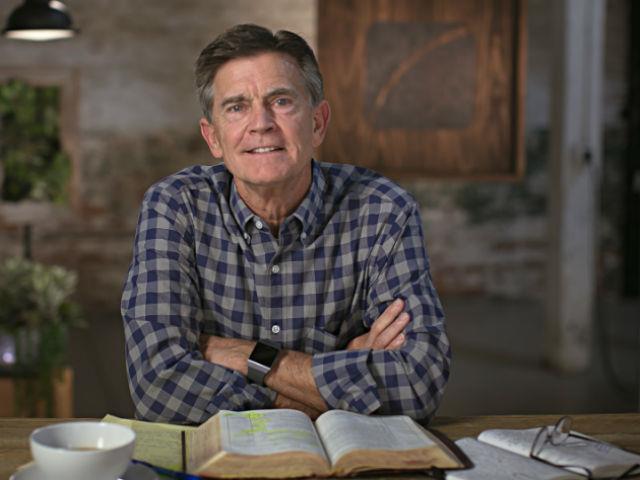
When a child, grandchild, or friend completely rejects your faith, the instinct is to push back with rules or logic, but that only deepens the divide. In this highly practical discussion, Chip and Aaron share an entirely different way forward. Through a raw, real-world roleplay, they reveal the exact questions that bypass defensive walls and trigger a genuine craving for truth. If you want to stop feeling helpless and discover how to leverage curiosity, empathy, and unconditional love to bring them back, don't miss today's program.
Resources
Connect
- 888-333-6003
- Website
- Chip Ingram App
- YouTube
Partner With Us
- Donate Online
- 888-333-6003
Guest Speaker Bio
Aaron Pierce is the International Mission Director of Steiger International, a rapidly-growing, worldwide mission organization that is called to reach and disciple the Global Youth Culture for Jesus. Steiger is active in over 100 cities around the world within the regions of Europe, Eurasia, Central Asia, the Middle East, East Asia, South America, Australasia, and North America.
Chip Ingram: All of us have people in our lives that we love so deeply, but they're far from God and they're moving farther. Today, we're going to talk about what you can actually do—not theory, not concept, but how do you reach into the heart and the life of the next generation and draw them back to the living Christ? That's today on Living on the Edge.
Dave Druey: I'm Dave Druey, and this is Living on the Edge with Chip Ingram. Last time, Chip sat down with his friend Aaron Pierce to help us understand just how differently this generation sees the world—what they believe about truth, morality, and God, and why. Today, they pick that same conversation back up, showing us exactly how to build the kind of real, patient friendship that actually opens the door to the gospel, even on the most difficult and divisive topics we face today. It's a special message titled Equipping the Church to Reach the Next Generation. So let's get started.
Chip Ingram: It is a tremendous joy to have Aaron Pierce back with us today. You are sharing things that are so near and dear to the hearts of parents and grandparents and pastors. Everyone that cares about the next generation, this topic matters so much. Aaron, thank you for being with us.
Aaron Pierce: It's good to be back and honored to do it.
Chip Ingram: We're going to do something I've never done before. I'd like to role-play just for a minute. I'm 24 years old, I've abandoned the faith, I'm in a homosexual lifestyle, I really just think that my truth is my truth. I'm at a coffee shop, and by now I have a few symbols of the alternative lifestyle, whatever you think they are. You walk in, and maybe I'm involved in a big justice cause and we're rallying, we're going to make a difference in the world because the world's totally messed up, and you meet me. How do you approach me? What kind of questions do you ask? Where do you go?
Aaron Pierce: First, it depends how well I know you, but my first thing is to ask, "Tell me how you're doing. How's life? What is going on in your world?" And then I can go further and just start to ask questions about the things that you care about. If you've been involved in a protest, I'd ask, "What are you doing? What is the protest? What are you hoping to accomplish? How did you get involved in that?" Help me understand your journey. You didn't arrive at these views just suddenly; it came through a journey. Give me some context. I want to understand your view. And then I want to find things that I can affirm. I really respect that you see that the world is broken, and I want you to know I'm with you. I see it too. I respect that you're not just standing by, you're not just going about your life, you want to do something about it. I respect that. How can I find points of connection? How can I affirm the good I see in their life? Or how can I ask them about other things in their life? They're a human being. They've got struggles and brokenness. Maybe they've got a broken relationship, or maybe someone close to them has been diagnosed with cancer, or maybe they're struggling with some mental health issues. Offer to pray. "Can I pray for you?" Even if they're not religious, they're not likely to reject it. They're going to say, "I know that means you care." Then praying for people for their felt needs. The question is, can you be a good friend? Can you follow the example of Jesus by becoming a friend of sinners? Can you intentionally pursue people in your sphere of influence that today are not following Jesus? Engage in spiritual conversations, which is just an extension of a meaningful friendship. If you have meaningful friendships with people, you're going to ask more than just about the weather and sports. You're going to get into deeper things because you care. If I'm really sharing my life with someone, they're going to know that I love Jesus, that he changed my life, and that it's because of him that I have peace in this broken world. How can I do this in a way that's intentional? It still requires courage and boldness and faith, but it makes sense in the context and it connects with people who probably won't connect if my only way of engaging them is to pull out a gospel script or to invite them to church. Those are good things to do, but there's a big segment of people, particularly younger people, that just won't connect with that. The whole heart of this is how I communicate Jesus in a relevant way. Relevance does not mean watering it down. Relevance does not mean compromising ecologically or morally. Relevance is about communicating in a way that people will understand. Then, of course, they have to make their own choices, but I think that's the distinction. We're trying to make Jesus accessible so they can understand who he is.
Chip Ingram: One of the observations that some really smart apologists have made, like Sean McDowell and others that are working with young people all the time, is that in times past you could start with the truth and then explain grace because there was a common understanding. Today, we need to flip that. You have to start with grace and help people see and understand. Back then you had to win an argument, now you need to win a hearing. Your life and your care and your concern matter. It's not either-or, it's just a little different order.
Aaron Pierce: Can I just add to that grace and truth thing? I think that's exactly right. I also think that the flip is in the past, you had to believe before you could belong, and maybe even behave before you believed before you belonged. Today we want to create spaces where people can belong before they believe. That's what our Bible study for the non-religious is about—creating a space for community that they long for even before they believe. We're not saying that belief doesn't matter, or truth doesn't matter. We're just saying that sometimes you have to approach it in a different way.
Chip Ingram: And that means inviting people over for dinner and even if you don't share the gospel or tell your testimony, it's a wonderful thing. It's meeting for coffee. It's going in with five questions to say, "I read all about this loneliness epidemic. How are your friends dealing with all of that? What could I do to support them?" Or to meet a need right then. "Why don't we go inside and let me buy you a meal?" Or, "I've got some friends that might be able to help you. You talked about needing some work." Whatever that is, those practical things that build bridges say, "I don't just care," but as First John 3:18 says, "Let us not love with word or tongue, but in deed and truth." You actually do something to help them. I think that's a really important part of this. I want to shift gears because all this sounds kind of great in general, and then politics comes up, gender comes up, homosexuality comes up. You mention the name of a political figure on the left or on the right. What I loved most about the book and the small group resource is that you actually talk about diving deep into those things in a way that doesn't alienate because you can't get around them in our world. You can't have a conversation where those things that immediately polarize and divide don't come up. I'm at work, I work with a lot of people that have a very different view of life and God. I want to reach them, especially younger people, and these are the kind of things that are absolute discussion stoppers and relationship stoppers. How have you learned to navigate those controversial issues in a way that doesn't just kill the relationship?
Aaron Pierce: It goes back to something you said earlier, which is that it starts with me and have I got my priorities right. The core here is that we don't make secondary things primary. The goal is for people to meet Jesus. When they meet Jesus and they encounter the beauty of who he is, it's like that old hymn, "Look full into his face and the things of this earth will grow strangely dim." When you meet Jesus, everything else fades away. But what happens is when we take secondary things like our political ideology or even morality—which is a downstream impact of when I encounter Jesus and I trust him, then I submit myself to him—when we make those things primary and we put them in front of Jesus, we actually make it harder for people to see Jesus. So the challenge for me is am I pointing people to Jesus or am I pointing them to something secondary that I've elevated to primary? Recognize that beneath the hostility and the conviction that people present when it comes to sexuality and politics and science and other things, right beneath that is an ocean of brokenness and confusion. Don't take the bait. Don't look to argue at that superficial level, but get deeper because in the end politics is about peace, it's about justice, it's about order in the world. It's about how I respond to the brokenness. The gospel speaks clearly to those things. Sexuality ultimately is about belonging, intimacy, love, and relationships—deep meaningful things. Rather than arguing at the superficial level, let's find places of connection at the deeper level and then point to how Jesus answers those things. It's reframing it that way.
Dave Druey: You're listening to Living on the Edge with Chip Ingram, and there's more coming up in just a moment. But first, stick around after today's teaching. We'll tell you about a resource built to help you have real gospel-centered conversations with the people in your own life who feel far from God. It's called Not Beyond Reach, and it might be exactly what you need for that one relationship you've been praying about. Now back to today's lesson.
Chip Ingram: Could you share a story of someone that with regard to their morality, their politics—all the kind of things that the average person would say there is no way that person is ever going to respond to Jesus. Tell me a story where this happens in someone's life. We've talked about concepts that provide truth and a skeleton and some general direction, but maybe put some clothes on it. Tell me a story that I could say, "Oh, I see."
Aaron Pierce: I have so many. I live in Minneapolis, so we've had a lot of political unrest over the years here, which of course brings all sorts of challenges, but it also brings opportunities. When these challenges arise, our team tends to go and find places where we can connect with people. I remember one time connecting with a couple. They looked as though they were very alternative in dress. They had the look of a very particular kind of political perspective, the kind of perspective that often would see Christians as their enemy. We went and talked to them, sat down, and just had a conversation about why they were there and why their hearts were broken over this. We just began to talk about the brokenness of the world. We see all this brokenness, but do you think that we're going to solve it with politics? Inevitably they're like, "No." And then you can go deeper and you're like, "You talk about brokenness, but what about my brokenness? Or the brokenness of my family?" We all desire these intimate relationships, but why is it that we all experience relational brokenness? Ask questions. "Do you think there's someone that will never hurt you or disappoint you?" They begin to open up and say, "I've experienced betrayal. I've experienced heartbreak." Then I can share, "I believe that God sees that. He sees your pain. He sees the cry of your heart and he cries with you and that he sent Jesus to bring healing, to bring forgiveness, to bring reconciliation, which is what we all require." Actually, Jesus is the answer to what you're looking for. At a political rally, I can talk about Jesus because he's the source to the greater brokenness, to the fundamental brokenness that we face. But I have so many other examples. I met with a guy who was gay. We connected with him at an outreach and he told me that he had a small business. He was an artist. Even though the world tells you that their sexuality is their primary identity, it's not. People have all sorts of things that are going on in their life and I don't have to just connect in that space. I have a little bit of a business background, so I said, "Let's meet and let me help you walk through your business plan." So we met for coffee and we began to talk about his business plan and we were talking very practical things. Eventually we moved to some spiritual topics, which are identity and purpose, which are critical to the whole sexuality topic. I talked about starting this business. Starting a small business is hard. Most fail and you need to root yourself in an identity that won't be shaken by the storms that you're going to face. You need something that you can hold on to because if you put your identity in something that can be taken from you, then you're vulnerable to circumstances. I shared how for me my identity was found in the unconditional love of God, that I was a child of God and that identity could not be taken from me. I had a conversation with this guy using business—yeah, he was gay, but we talked about business that I could connect to identity and where we find our identity. We can have conversations like that all the time.
Chip Ingram: Well, it takes time and it takes patience. It's a long play that I think what we miss. What you just described didn't happen the very first time you met him. You sat down in a circle while all the things were going on. You asked them why they were there. You listened to all their anger and why and which politicians they hated and what was completely broken. Then you asked them some "why" questions which led to some reoccurring relationships that built the kind of safety that you're talking about. So I think for some of us, it just realizes we've got to get out of our Christian cocoon. I go to church on this day, I live my life over here. If you want to see people know Jesus, you have to go where they are. You have to make time taken away from other things. For some of you, that's your own kids. Because they've rejected you, you're living in hurt. "Well, they rejected me, well..." and it's passive-aggressive. Now you're rejecting them by not being engaged. The enemy is winning when that's your attitude. It takes tremendous humility to grasp: I may be right, but being right is not as important right now as having the right attitude and developing the right relationship as a bridge with absolutely no compromise to what I believe about scripture, about Jesus, about salvation. It will require a cost. I would just say to those listening, if you really care deeply about your own children and grandchildren and if you are concerned about the world, the change doesn't happen by someone coming on a white horse. That will happen one day when the Lord returns, but it's going to happen one person at a time, one small group, one little group of friends, one community at a time who says, "We refuse to continue to live the way we're living. We must build relationships. It makes us uncomfortable, we don't know exactly how to do it, but we can't not do it." I just want to say that you guys are modeling that around the world more effectively than anyone I know. In my personal experience, if anyone wanted to know how to reach the next generation, what you all actually do, not just talk about, is the model that I see in the New Testament. You guys just are doing what Jesus did and you are seeing the same results that Jesus had. The Bible's really clear—not wishy-washy love, but love: absolute, sacrificial, costly, other-centered, desperate prayer, fervent prayer love never fails. That's the hope that we have. Any final thoughts as we wrap things up here? My heart goes out to every parent or grandparent that I've talked to that are shaking their head and in tears. "I don't get it. I don't know what happened. As far as I knew, we were sincere, we were intentional, we did everything right. How did we end up here?" Those people are hurting, Aaron. A lot of them are a part of who listen in or do studies with Living on the Edge. Could you give them just a word of hope as we wrap things up?
Aaron Pierce: Absolutely. I guess I would say that God sees your heart and he sees your tears. He knows the grief, the confusion, the disappointment, and even the questions you've wrestled with, maybe asking yourself, "Did I fail? Did I do something wrong?" These are real questions and you're not alone in asking them. But I want to encourage you with this: your child's story is not over and God has not stopped working. Even when you don't see it, he is pursuing. That's what gives me so much hope—that God loves your child more than you love your child. He left the 99 to go after the one and he continues to do that. God is active and moving in the world. I can say it, I can testify it. We are seeing young Christian leaders raised up fueling grassroots movement reaching people like your kids right now. They are with them in the clubs, the cafes, the universities, the music festivals, the spaces where they are, befriending them and sharing Jesus, and we are seeing God moving. I just want you to know God is on the move. He is raising up a new generation of radical young people. Again, the encouragement here is we are just one part of what God is doing. You are one part of what God is doing. You don't have to hold it all together. It doesn't depend entirely on you. Do your part. Get on your knees and cry out to God, pursue your child, meet them on their turf, and respond to the promptings of the Holy Spirit. But ultimately, God is doing the work and he is on the move. Our hope is not in ourselves, it's not in our perfect parenting, it's not in having all the right answers, our hope is in Jesus. And that's what gives me confidence.
Dave Druey: You're listening to Living on the Edge with a special discussion between our Bible teacher, Chip Ingram, and his good friend, Aaron Pierce. Today's message is titled Equipping the Church to Reach the Next Generation, and it's part of our larger series called Caring Enough to Connect: Building Bridges to Those We Love. Aaron's advice today was simple, but not easy. Go where lost people go, don't judge them, ask good questions and really listen, and let safety come long before you ever get to truth-telling. And that's exactly the kind of practical, field-tested wisdom Aaron unpacks in his book, Not Beyond Reach. It walks you step-by-step from friendship to spiritual conversation to the gospel itself without ever feeling like a script. You can get your copy right now at a special price by going to livingontheedge.org/offers. If this conversation is exactly what your family, your small group, or your church needs, we invite you to stand with us financially today. Your gift helps keep teaching like this on the air and across digital media, reaching people who feel far from God all across the country. We've made it easy to give online, just go to livingontheedge.org or call and give over the phone by dialing 888-333-6003. You can also send your gift by mail to Living on the Edge, PO Box 3007, Suwanee, Georgia 30024. Now let me hand things over to Chip Ingram as we wrap up this impactful discussion.
Chip Ingram: Thanks so much, Dave. You know today we've talked about a very different way to reach the next generation. Aaron did it so naturally. It's what he does, it's where he's been. Starting this conversation, building rapport, talking about these kind of issues—that doesn't come naturally to most of us. We have answers we want to give. If you want to learn how to really connect with your child, your young adult, your grandchild, or as a pastor you want to develop something that reaches the next generation in your church, let me tell you, the tool you need to get is this Not Beyond Reach small group resource. It is designed to help you personally, your group, or your church actually do what we talked about. Let me encourage you: don't think about it, actually do it. You'll be glad you did.
Dave Druey: Once again, you can find Aaron's book Not Beyond Reach by going to livingontheedge.org/offers. Next time Chip returns to his own teaching on what it actually takes to build great relationships. Join us then here on Living on the Edge. Today's program is produced and sponsored by Living on the Edge.
Related Episodes
Understanding the Global Youth Culture
Monday, September 14
Let's Talk about the Hard Stuff, Part 2
Friday, September 11
Let's Talk about the Hard Stuff, Part 1
Thursday, September 10
About Living on the Edge
Living on the Edge, a discipleship ministry and radio/television program of pastor and author Chip Ingram, is committed to providing everyday believers with tools that help them live like Christians. Each week, Chip will take you through God's Word for insight on topics like strengthening your marriage, understanding love and sex, raising children, and overcoming painful emotions. Today, a daily listening audience of more than one million people can hear Living on the Edge on over 1,100 radio and TV outlets across the United States and internationally.About Chip Ingram
Chip Ingram's passion is to help Christians really live like Christians. As a pastor, author, coach and teacher for more than twenty-five years, Chip has helped people around the world break out of spiritual ruts and live out God's purpose for their lives.
Chip is the author of eleven books and reaches more than one million people each week through online, radio and television outlets worldwide. Chip serves as CEO and Teaching Pastor of Living on the Edge, an international teaching and discipleship ministry. Chip and his wife, Theresa, have four children and twelve grandchildren.
Contact Living on the Edge with Chip Ingram
Mailing Address
Living on the Edge
PO Box 3007
Suwanee, GA 30024
Phone Number
(888) 333-6003
