Understanding the Global Youth Culture
Ministries > Living on the Edge with Chip Ingram
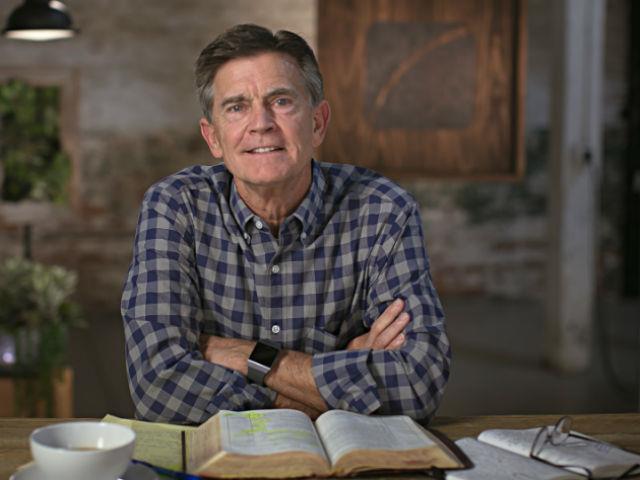
Why does the next generation seem so radically different, and why are traditional church approaches falling flat? Aaron Pierce takes you behind the scenes of today’s global youth culture to expose the hidden forces shaping how our kids and grandkids think. From the illusion of "my truth" to the silent epidemic of loneliness, this conversation reveals the deep emotional undercurrents driving their skepticism. If you want to understand the heartbeat of today's youth and uncover the unexpected desires they are secretly longing to fulfill, you cannot afford to miss this.
Resources
Connect
- 888-333-6003
- Website
- Chip Ingram App
- YouTube
Partner With Us
- Donate Online
- 888-333-6003
Guest Speaker Bio
Aaron Pierce is the International Mission Director of Steiger International, a rapidly-growing, worldwide mission organization that is called to reach and disciple the Global Youth Culture for Jesus. Steiger is active in over 100 cities around the world within the regions of Europe, Eurasia, Central Asia, the Middle East, East Asia, South America, Australasia, and North America.
Chip Ingram: As you listen today, if there is someone in your life that's drifted away from the Lord—in fact, maybe they're actually hostile, maybe they're your son or one of your grandchildren—if that's you, there's hope. Today we're going to talk about not just the next generation, but the people that you love. Stay with me.
Dave Druey: I'm Dave Druey, and this is Living on the Edge. In our series *Caring Enough to Connect: Building Bridges to Those We Love*, we've been learning what it takes to build real relationships in a broken world. Today Chip Ingram sits down for a special conversation with his good friend Aaron Pierce, who leads a global ministry called Steiger International, spending decades reaching secular, non-religious young people all over the world with the gospel. Together, they'll help us understand how this generation really thinks and why the people you love are never beyond God's reach. Such an important message. Let's get started now. Here's Chip Ingram.
Chip Ingram: Well, thanks so much, Dave. We do have a really special guest and a very close friend. Aaron, tell us a little bit about your journey just for those that may not be familiar with you or our relationship.
Aaron Pierce: Chip, it's just an honor to be on this call with you and to talk with you and to serve with you. I've always been so grateful for you and the influence you've had on my life. You know, I always considered you a mentor even before I knew you, so you've had a big influence on my life. I grew up as a missionary kid in Amsterdam. You've met my parents, and they were missionaries in Amsterdam. They had a heart to reach young people that wouldn't walk into a church. If you consider a city like Amsterdam, that's pretty much all young people. They see these big, beautiful cathedrals that are often closed on Sunday and they're museums. Many people just view the church as a tradition of the past, not relevant to my life. You find that a lot of people living in the secular culture are apathetic to it; they don't think about it all that much. Some are even cynical or hostile, and yet many are very open to spirituality of various kinds, and there are all kinds of spiritual expressions that people draw to. In that environment, I just saw a secular culture where people who might not walk into a church on a Sunday were still hungry for the very things that Jesus brings. That idea of how we bring the gospel, which is as relevant today to a culture that often thinks it's not—that was the context I grew up in as a kid. I got to see God move and change lives, and it kind of ruined me in a really good way because I saw that Jesus is real and He changes lives. That was the context that then led me to lead this mission called Steiger that's mobilizing followers of Jesus to reach young people who would not walk into a church.
Chip Ingram: So now you have teams that are reaching young people in how many cities around the world now?
Aaron Pierce: It's over 275 cities, which is wild because when you were with us a few years ago, it was about 90. We've just seen tremendous growth over the last years, an explosion of a move of God reaching young people around the world.
Chip Ingram: Well, as we now say that and say, "Wow, there's spiritual hunger and God's really, really working," I want to talk to parents and grandparents who are sitting in a little bit different situation. Their kids went to a Christian school, they went to youth group, they either went away to college or there was a gradual drift. They're late teenagers, they're middle 20s, some are in early 30s now. They want nothing to do with God, often nothing to do with their parents. Some have not only drifted from the faith, some have rejected it, some have deconstructed. More than a cultural trend, you saw this as a genuine crisis.
Aaron Pierce: Like you, Chip, I get the opportunity to preach at churches and conferences and events all over the world, including here in the US. After I preach, I would have a line of parents and grandparents coming to talk to me with tears in their eyes, talking about their young adult child. Honestly, the volume and consistency of their story, most now seeming to be involved in LGBTQ as well, and just all of that—there was just so much pain and so much heartache, and also a sense of not knowing what to do. God began to break my heart for these parents and grandparents and just saying, "God, we've got to serve them. We've got to equip them." This went from statistics and trends to something deeply personal for me because of the stories that I was hearing from these parents and grandparents.
Chip Ingram: Let me pause for a moment here. I want you to invite a parent or grandparent who feels like there's not any hope. They won't talk to me. I don't bring up religion anymore at all. I can't even talk about Jesus. I don't get it, I don't understand. Not saying that their sons and daughters who have drifted or are deconstructing are right, but could you invite them to sit down at a table just with you and me, maybe picture a cup of coffee, and would you help them understand how their kids and grandkids are thinking? How they view the world that is so different than their parents? Help that parent or grandparent understand. By the way, if you're a parent or grandparent and you're thinking, "Oh, please speak," could I ask you to lean back right now? Some of this feels very painful. Some of you have dealt with a lot of anger, others with a lot of guilt. Our goal here is we've got to build some bridges. To do that, we need to step back a little bit and discover what they're feeling, how they're thinking. Not saying it's always right or true by any means, but if you don't understand that prayer that I pray often by Saint Francis, where he says, "Lord, grant that I may seek to understand more than to be understood, seek that I may love more than to be loved." That idea of empathy—help us. What do you hear from these kids? You meet them on the street, you've met them at LGBTQ rallies, you've met them in places that most Christians never go, and you hear their stories. Help that parent or grandparent.
Aaron Pierce: You nailed it. I think so often in this context, we're looking to tell people the answer rather than first to understand. I actually think in order to really communicate Jesus effectively, we need to know what they're thinking, what's influencing them. We live in a culture, this generation, that is quite distinct from a few generations ago. The voices and influences that are shaping how they see the world—essentially, the main god of this age as 2 Corinthians 4:4 says, "The god of this age has blinded the minds of unbelievers." The god of this age is what I would describe as secular humanism. It's this idea that God has been replaced and I am at the center. I am God. There's no outside authority that can tell me how to live my life. It's the era of "my truth." All identity, purpose, and morality is self-constructed. In the Christian worldview, we discover those things because God designed those things. In the secular world, I design it. I develop it. I decide who I am. I decide what's right and wrong. I decide the purpose for my life. It sounds liberating. It sounds like freedom, but the truth is this worldview is actually quite destructive. It's like poison wrapped in bubble gum. It looks all sweet and shiny on the outside, but it's actually destroying people. It's like it says in Proverbs 16:25, "There's a way that seems right to a man, but its end is the way to death." What we have is this culture that's telling people, "It's all about you. There are no rules. The rules are fake. Just do what you want, do what makes you feel good." Instead of freedom, we're finding bondage. We have a culture that is confused, that's sexually broken, lonely, anxious, depressed. This is the felt need of our culture. What's interesting is secular culture does not deny those things. They just don't have a good answer to them. This is all that's going on, and there's so much confusion. Take the topic of love. We all have this innate desire for love and intimacy. It's how God wired us. But our culture is incredibly confused about love because on one hand, you have hookup culture where sex is basically just a physical act for pleasure and apart from consent, there's no moral guidance. So just do what makes you happy. You've got that on one side. Then on the other side, in the same breath, we're looking for the "one" that will complete us, that will satisfy all our needs and desires—that person that will fill the emptiness. You've got these two extremes that people believe about love. No wonder we're confused. No wonder we're broken. I think the response to all of this shouldn't be, "What's wrong with you? How dumb could you be?" Rather, it should be like Jesus, which is to have compassion on those that are confused. That's the state of our culture: we're confused. This is the air that people are breathing today. Then you add to that a general skepticism towards authority and towards religious institutions. Even though Jesus has the answers to what they are looking for, they're not looking to the church. Part of it is just recognizing the cultural moment that we're in and how we now communicate Jesus in that context.
Chip Ingram: And that's what I want to talk about. Because when I was with your team and as we built time together, one of the reasons that we partnered together to develop the book, *Not Beyond Reach*, is what I saw was—and maybe this is part of my giftedness—I saw that you all literally had a very clear process that you walked people through that you were so close to it you almost didn't see it. It was so clear. First of all, they go where lost people go. Second, they don't judge them; they ask questions and they listen. Third, you all would have spiritual conversations that everyone has: loneliness and what's life all about and what's your purpose, with no judgment and often with a bottle of water or a meal. Then you would have Bible studies for non-Christians. You could ask anything, no pushing, and yet what you did is you built safety and then you asked them questions that honestly, in their confusion, they couldn't really answer. But they felt loved and it was safe and they were now open to do something they hadn't done before. Instead of packaging Jesus with religion or "this is what my parents believe" or "this is connected to some political figure or some building," all of a sudden, you were introducing them to the Jesus of the New Testament in a very safe way. You built a lot of bridges. Then you had that gospel conversation. You let them understand that the root issue is sin for all of us, that there is a Savior, there is hope. So the book was to codify that.
Dave Druey: You're listening to Living on the Edge with Chip Ingram, and there's more coming up in just a moment. But first, stick around after today's teaching. We'll tell you about a resource built to help you have real gospel-centered conversations with the people in your own life who feel far from God. It's called *Not Beyond Reach*, and it might be exactly what you need for that one relationship you've been praying about. Now back to today's lesson.
Chip Ingram: Let me say this. Mary's 22 years old, she doesn't talk to her parents anymore, she's in an alternative lifestyle, and her parents feel like "I just can't get through to Mary anymore." Or you can make it George, who's 24. You're sitting down with them. They have some alternative sort of symbols around that let you know, "This is my new identity." Would you help a parent listen to you sit down and could you just have a conversation with that person? Maybe you notice—I often do this—you notice a tattoo that you know has some symbolism and I will often say something like, "Wow, that's an interesting tattoo. Tell me a little bit about that," which is a completely different approach than "Why they got that stuff?" Help that parent understand what you actually say. Because I want to talk about a resource that we have for them, but I think they need to hear: "Okay, it's confusing, the world's messed up, but they're living in pain. How do you go about connecting with this person?" That would model for them how they could go about doing it.
Aaron Pierce: I think the complexity here is distinct when it comes to parents and grandparents because the dynamic can get a little more emotional; there's more going on. One of the things I would say is there is this tendency to want to rush in with the answers: "Look at this article," or "The Bible says this," and kind of come in hot with your answers. Truth is truth and people need to hear the truth, but I think when it comes to kids, parents, and grandparents interacting with their kids, often the key is that you need to be relationally present in their life. What the enemy wants to do is to divide and to disconnect and isolate. I think what you need to do is first and foremost show them with your actions that even if you don't agree with their lifestyle, even if you don't agree with their choices, you love them and nothing's going to change that. You will pursue them and meet them on their terms. Part of what you're doing is you're challenging some lies that they believe: that they're going to be rejected, that you don't love them, or that your love is conditional. Part of that is you're softening the ground for work that the Lord can do. I've been meditating on this idea of the aroma of Christ and this idea that when the Holy Spirit is inside of us, the fruit of the Spirit really draws people. God can do work in people's hearts even before we communicate the words. While I'm a big believer in preaching the word, often with parents and grandparents, the first thing is we need to make sure we're solidifying the relational bonds. That's one of the ways that the enemy sets us apart and disconnects us. So that would be my first point. The other thing is we need to recognize that what they believe is not simply a matter of logic and persuasion. There is a spiritual reality going on. I already quoted 2 Corinthians 4:4; the god of this age has blinded the minds of unbelievers. So what we're dealing with is spiritual blindness. All my apologetic arguments and all my persuasion is not enough if they are spiritually blind. That is why prayer is not just this nice Christian activity that we do or a warm-up to the real work; prayer is essential. So I would start with those two places: building the relational bond and praying in a new way. God's got to do something supernaturally for my words to matter at all. I would start with those two places and then pray also that God would bring about circumstances and people around them that could reintroduce them to Jesus because I would suggest that in most cases, the parents or the grandparents are not going to be the ones that God uses to bring Jesus back to them. So it's kind of this surrender there.
Chip Ingram: Well, I saw the process when I was doing some training in Germany, but I never will forget—and our new president, he's not new anymore, he's been with us three years, Mike and I were there together—and you broke up into groups and into regions, different regions of the world, and said, "We're going to pray now." You know, I thought, "Okay, yeah, so we knelt down and got in circles and started to pray." Well, I was used to how other Christians pray, you know, "Lord, help us," blah, blah, blah. We're 45 minutes into it. We're an hour into it, and I'm listening to young people plead with God, intercede, fasting, crying out. There was a level of passion and intensity because they had been there. They had been lost. They had been blind. I want to say something as a pastor and as a parent and a grandparent. This is going to be hard for some of you to hear: some of the issue is not with your kids; some of the issue is with you. You need to ask yourself, are you living an authentic life? Is church something you just go to? Are you in God's Word? Are you passionate—do you want your life to work out? Are you a consumer or are you the kind of Christian that really reveals Christ? I don't mean this as some big guilt trip. I'm just saying you can't change other people, but you can look into your own heart, your own life and say, "God, start with me. Take away the pain, the hurt, the calluses, the rejection, the part where you want to pay them back." All those tapes about how they're so ungrateful, they don't remember all the things I did for them—I paid for their college, I did this, I made these sacrifices—all that may be true, but those may be the very barriers and some of that is self-righteousness. Some of it is you wanted good, moral, nice kids, but maybe the living Christ needs to be living more deeply in your heart and your life. You begin to say, "Oh God, I long for my child or my grandchild to fully, completely return to You, or maybe to really meet You for the first time. But here's where I want to start: whatever I need to see, whatever I need to address in my own life, whatever sin, whatever perspective—God, speak and work in me first that I might be a tool in Your hands to reach my son, my daughter, or one of my grandkids." I don't mean that harshly. I've been around this for a long time, Aaron, and I've seen where the transformation occurs. I have multiple friends whose kids are in alternative lifestyles, and the ones who have seen—and sometimes it's been a decade, there was one that's been two decades—he just wouldn't stop loving his daughter. Yes, she got married to another woman, they adopted kids, and then over time, when you sow to the flesh, you do reap corruption. Those relationships break down and there are times of pain. The people they come back to are ones that they can respect and who have loved them. He never changed his view of theology; there were always clear boundaries, but he wouldn't stop loving her. In the midst of the pain, the break-up, the relationship, the challenges with the kids, she turned to come to him to say, "Dad, I need your help," and he was there. He just kept building bridges and, honestly, received a lot of rejection along the way, not only from her but from brothers and sisters and other people who said, "You can't take that stance. You just need to change your theology." And yet, people know down deep in their heart who they can trust. That's built on what you've talked about and that's been the whole process of not only the book, but now the new video and small group resource to help parents, grandparents, and pastors really learn there is a new way to reach people. It's not telling them a bunch of facts of what they need to believe.
Aaron Pierce: You exactly nailed the heart of this. And then, yes, there are times to talk, but what we teach in the book is you go from these relational, loving friendship conversations—which Jesus modeled, by the way; Jesus was a friend of sinners. That was one of the great accusations against Jesus. He demonstrated that you can love people and not affirm the sin in their life, which is what He did. But then how do I engage in spiritual conversations that serve as a bridge to Jesus? How do I take the everyday things of life that we wrestle with, that we have questions about, and ask questions and create an environment where people can have these conversations? We've seen that over and over: it opens people's hearts to Jesus.
Dave Druey: You're listening to Living on the Edge with a message titled "Understanding the Global Youth Culture," part of our series *Caring Enough to Connect: Building Bridges to Those We Love*. If you missed any part of today's conversation between Chip Ingram and Aaron Pierce, be sure to catch up when you can by going online to livingontheedge.org. And if today's conversation raised more questions than it answered, that's exactly the point. There's much more coming up, so stick with us as we continue this impactful study. And to be sure you never miss a message, subscribe to the Living on the Edge podcast to catch every conversation wherever you listen. Aaron grew up as a missionary kid in Amsterdam, watching secular young people who were spiritually hungry but had already written off the church. That's exactly what led him to write *Not Beyond Reach*. It's not a theory book; it's a practical guide for anyone who loves someone who's drifted from the faith, showing you how to move from friendship to spiritual conversation to the gospel itself. Purchase your copy today at livingontheedge.org/offers. And if today's conversation stirred something in you, we encourage you to act on that by sending a donation to help this ministry keep reaching people who feel far from God. Give online today at livingontheedge.org or call us at 888-333-6003. You can also send your gift by mail to Living on the Edge, P.O. Box 3007, Suwanee, Georgia 30024. Now here's Chip Ingram to close out this really special message.
Chip Ingram: Dave, thanks so much. You know, we have covered some issues that are near and dear to all of our hearts and some that have created much, much pain. But I want to remind you, there are answers and there are solutions and there's some action to take. If you really care, let me encourage you to get the small group resource. There are videos that you can do privately. It's way better to do in a small group. Some of you need to introduce this to your pastor. We can't keep talking about reaching the next generation unless we do something. So let me encourage you: don't just be moved; be moved to action. The Bible's really clear: when we hear truth, it's how we respond to it that makes a difference. Dave, why don't you give them a few details on how they can get it?
Dave Druey: Happily. Once again, the book is called *Not Beyond Reach*, and it's available at livingontheedge.org/offers. Well, next time, Chip and Aaron continue their conversation, showing us exactly what the next generation believes and how you can reach them with the hope of the gospel. Join us again right here on Living on the Edge. Today's program is produced and sponsored by Living on the Edge.
Related Episodes
Equipping the Church to Reach the Next Generation
Tuesday, September 15
Let's Talk about the Hard Stuff, Part 2
Friday, September 11
Let's Talk about the Hard Stuff, Part 1
Thursday, September 10
About Living on the Edge
Living on the Edge, a discipleship ministry and radio/television program of pastor and author Chip Ingram, is committed to providing everyday believers with tools that help them live like Christians. Each week, Chip will take you through God's Word for insight on topics like strengthening your marriage, understanding love and sex, raising children, and overcoming painful emotions. Today, a daily listening audience of more than one million people can hear Living on the Edge on over 1,100 radio and TV outlets across the United States and internationally.About Chip Ingram
Chip Ingram's passion is to help Christians really live like Christians. As a pastor, author, coach and teacher for more than twenty-five years, Chip has helped people around the world break out of spiritual ruts and live out God's purpose for their lives.
Chip is the author of eleven books and reaches more than one million people each week through online, radio and television outlets worldwide. Chip serves as CEO and Teaching Pastor of Living on the Edge, an international teaching and discipleship ministry. Chip and his wife, Theresa, have four children and twelve grandchildren.
Contact Living on the Edge with Chip Ingram
Mailing Address
Living on the Edge
PO Box 3007
Suwanee, GA 30024
Phone Number
(888) 333-6003
